
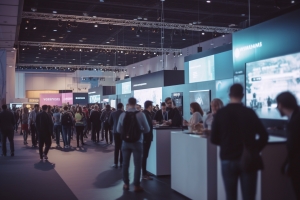
 Trade shows and exhibitions can make up a significant portion of an event production company’s roster, but overlooking proper protections for these events is a common error. Unlike other types of bookings, such as weddings, trade shows or exhibitions pose risks that are not always addressed by boilerplate trade show insurance.
As your production team plans your event approach, make sure to spare time to evaluate your existing insurance details. If you need more robust coverage, or if you are pursuing insurance for the first time, stay educated on what makes exhibitions and trade shows risky. Here are the basics to get you started so you can stay protected, comply with venue rules, and keep every activation on schedule.
What You Need to Know:
|
Why Trade Shows and Exhibitions Pose Different Risks Than Other Events
Any event can present unpredictable surprises that cause damage or liability. However, exhibitions and trade shows are especially prone because you tend to have less control in a larger-than-average environment. Think of how many things can go wrong while constructing booths, rigging audiovisual equipment, adding branded installations, or creating pathways for crowds. Anything from physical harm to catastrophic equipment failure that hamstrings the entire event is possible.
This is the primary reason why exhibition stand insurance must be carefully customized to your specific event needs. Add in the fact that venue load-in windows are tight, and you may feel hurried, which can, in turn, lead to mistakes that expose you to liability.
The Key Event Production Insurance Coverages for Trade Show Work
 Every event is different, but some baseline event setup liability coverage should always be in place to protect your team. Policies that address on-site accidents, gear loss or damage in transit, and the certificates of insurance most exhibition halls demand before granting access are among the most essential to include in your insurance portfolio. Do not compromise on any of the following.
General liability
Perhaps the single most used type of coverage is general liability insurance for events. If someone on your team damages the venue (e.g., scrapes the floor with equipment) or harms a third party (e.g., accidentally tripping someone with power cords), your company could be on the hook for the cost to rectify the situation. General liability insurance, which addresses risks ranging from damage to the premises to booth build liability coverage if a booth falls apart, is non-negotiable for most teams.
Equipment
AV equipment coverage is another integral part of your portfolio. Should your equipment be damaged, stolen, or malfunctioning, equipment insurance can help to repair or replace it so you do not have to pay out of pocket.
Business interruption
For trade shows and exhibitions, one of the greatest risks is that something goes wrong that prevents you from fulfilling your contractual obligation to work with the event. Perhaps important equipment has gotten lost in transit, or your team has fallen ill and can no longer assist. Business interruption insurance helps to cover the cost of any delays.
Workers’ compensation
Every event team should have workers’ compensation insurance, which helps to cover costs if someone is injured while working on the event. This is especially important for large bookings such as trade shows, where equipment tends to be heavier and is being installed in a larger space, leading to greater risk from ladders, scaffolds, and more.
Inland marine
Sometimes called goods-in-transit coverage or equipment floater protection, inland marine insurance addresses the risks your equipment and materials encounter in between your facility and the trade show. Other policies, such as equipment insurance, do not usually cover loss or damage during this portion of the engagement.
Common Insurance Requirements for Venue Access
 For most events, you will be required to produce a convention center certificate of insurance demonstrating that you have met the venue’s minimum insurance requirements. While each venue is different, these typically include:
- Commercial general liability coverage
- Limits of at least $1 million per occurrence
- Coverage dates that include not just the show days but also move-in and dismantling time
- Named additional insureds, such as the venue owner or exhibition organizer
Trust MFE Insurance to Provide Multifaceted Trade Show Vendor Insurance Coverage
If you are ready to secure the appropriate protection before your next trade show or exhibition project, be sure to critically evaluate your coverage to learn what you are missing. MFE Insurance structures coverage for companies managing booth builds, AV setups, and immersive branded environments across multiple venues. Contact MFE Insurance to get personalized guidance and a plan that is personalized for your team.