
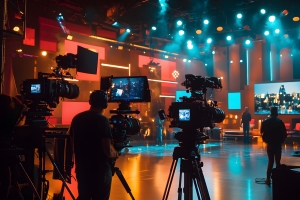
 Production companies, no matter how small, still likely have tens or even hundreds of thousands of dollars in equipment. For larger studios, that number can easily reach into multiple millions. Insuring that equipment is one way to safeguard the company’s bottom line if damage, theft, or other harm occurs.
However, there is no single best “equipment insurance,” and you will need to decide which policy is right for you. For many studios, this decision comes down to scheduled vs. blanket equipment insurance.
Both scheduled coverage and blanket coverage can be useful, but the right choice depends on your specific company, the equipment you own, how much you are willing to pay out of pocket for repairs or replacements, and whether you value all of your materials the same. Here are the basics to help you choose between scheduled and blanket production insurance.
Key Takeaways
- Companies with a few high-value items commonly choose scheduled production equipment insurance.
- Blanket production equipment insurance is broader and may cover much of a company’s equipment at once.
- Scheduled insurance comes with higher administrative demands.
- Blanket insurance may contain exclusions you were not prepared for.
What Is Scheduled Production Equipment Insurance?
Scheduled production insurance is not tied to a “calendar” schedule; instead, it insures individual items by listed value. In other words, a schedule is a list onto which a studio can add specific pieces of equipment if it wants to insure only certain items.
What Is Blanket Production Equipment Insurance?
 Unlike scheduled production equipment insurance, blanket coverage protects a whole category of gear under a single limit. This lets studios avoid picking and choosing what is insured and what is not.
Which Is Right for You?
Production equipment insurance should be customized to your company, with a full knowledge of the trade-offs each brings in cost, administration, and claims. Do you have a smaller, specialized inventory or a large, frequently changing equipment list? How much of your budget have you allocated for insurance? These questions will help determine the answer that suits your situation.
In general, scheduled production equipment insurance is most commonly chosen for high-value equipment. The schedule lists equipment individually by identifying information (e.g., a serial number or value), allowing your company to insure specific equipment of particular financial concern should it be damaged or stolen. This also reduces ambiguity that can come with other types of insurance policies, because there is no doubt about whether a specific piece is covered. Thus, studios often choose scheduled production equipment insurance if they frequently work with specialized inventories, especially if that inventory is limited to a relatively small number of expensive, identifiable items.
However, administration is the largest challenge for scheduled insurance. Each time you buy, sell, replace, or upgrade equipment, you will likely need to review and update your schedule. Forgetting to add new equipment can expose your company to financial risk, so scheduled coverage requires detailed, consistent care.
Conversely, blanket production insurance requires the least management. Instead of assigning individual limits to each piece of equipment, blanket coverage applies one limit across entire categories or groups of equipment. For instance, you might have $500,000 as a blanket limit addressing most of what you own without needing to declare specific items.
Many companies favor this type of coverage because it is flexible. You don’t need itemized lists, and if your inventory changes (e.g., you rent frequently), you don’t need to adjust your policy. However, your blanket limit becomes the most important factor. You must understand how much your company owns and whether it is covered. If you purchase a $500,000 limit but own more than $1 million in equipment, your insurance will not be able to address a total loss.
Similarly, the policy may include restrictions, so “blanket” does not necessarily mean that everything is automatically covered. Policyholders should always examine the sublimits or exclusions to see whether their most important items are included under the blanket protection.
Choose the Coverage Structure That Is Right for You
 As you evaluate which type of insurance is right for you, be sure to consider not just the nature of the equipment you own but also what level of administrative oversight you are willing or able to contribute. If you have adequate administration, a scheduled policy gives you greater control. However, limitations in administrative capacity may make blanket coverage more effective.
MFE Insurance helps production businesses choose the coverage structure that best matches their equipment and how they work. Contact MFE Insurance to get personalized assistance with a customized policy that directly addresses your specific situation.